Welcome to the official website of Beijing Leadlong Technology Co., Ltd


Oct 26,2026
Why You Need Reliable Carbon Testing Instruments in Electrical Applications
Why You Need Reliable Carbon Testing Instruments in Electrical Applications Understanding Carbon Testing Instruments Carbon testing instruments are essential devices used to measure the presence and concentration of carbon compounds in various materials and environments. In the electrical applications sector, these instruments help ensure that electrical components and systems meet safety and

Oct 21,2026
Understanding the Importance of a Particle Stability Tester in Electrical Testing
In the realm of electrical instruments and parameters testing devices, the Particle Stability Tester stands out as a vital tool for maintaining quality and performance standards. This device is designed to evaluate the stability of particulate matter within insulating liquids, powders, and other materials used in electrical applications. The significance of particle stability in electrical compone

Oct 16,2026
The Environmental Impact of Using Tap Volume Density Testers in Electrics
The Environmental Impact of Using Tap Volume Density Testers in Electrics Introduction to Tap Volume Density Testers In the realm of electrical engineering, tap volume density testers play a pivotal role in ensuring the accuracy and efficiency of electrical components. These instruments are designed to measure the density of dielectric fluids, essential for the optimal operation of transformers an

Oct 11,2026
Understanding Calcined Petroleum Coke Carbon Dioxide Reactivity: Insights and Applications
Calcined petroleum coke (CPC) is a high-carbon material derived from the carbonization of petroleum products. It is commonly used in various industrial applications, particularly in the manufacturing of electrodes for aluminum production and as a key input in the production of anodes. One aspect of CPC that is garnering increased attention is its reactivity with carbon dioxide (CO2). Understanding

Oct 06,2026
Understanding Air Reactivity: The Role of Calcined Petroleum Coke in Material Testing
Understanding Air Reactivity: The Role of Calcined Petroleum Coke in Material Testing Table of Contents Introduction to Air Reactivity in Material Testing What is Calcined Petroleum Coke? Key Properties of Calcined Petroleum Coke Importance of Calcined Petroleum Coke in Material Testing How Calcined Petroleum Coke Affects Air Reactivity Testing Methodologies for Air Reacti

Oct 01,2026
Understanding the Significance of Attrition Index Apparatus in Electrical Testing
In the realm of electrical testing, accuracy and reliability are paramount. The determination of attrition index apparatus plays a crucial role in evaluating the durability and performance of materials, which is especially significant in the fields of electrical instrumentation and parameter testing. This apparatus is primarily used to measure the attrition index, a key indicator of how well a mat
Sep 26,2026
Overcoming Common Challenges in Anode Carbon Dioxide Reactivity Testing: Comprehensive Solutions
Overcoming Common Challenges in Anode Carbon Dioxide Reactivity Testing: Comprehensive Solutions Table of Contents 1. Introduction to Anode Carbon Dioxide Reactivity Testing 2. Importance of Accurate Reactivity Testing 3. Common Challenges in Anode Carbon Dioxide Reactivity Testing 3.1 Inconsistent Results Across Different Tests 3.2 Equipment Calibration Issues 3.3 Environmental Infl

Sep 21,2026
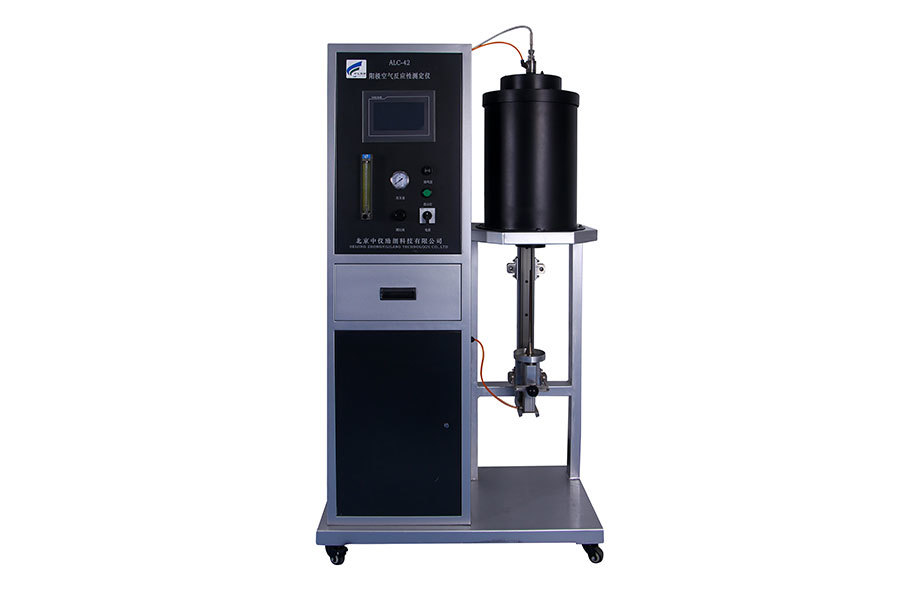
Understanding the Anode Air Reactivity Tester: A Key Tool in Industrial Reaction Equipment
The Anode Air Reactivity Tester is a specialized device designed to evaluate the reactivity of anodes under controlled conditions. Anodes are critical components in electrochemical processes, particularly in industries such as metal finishing, battery manufacturing, and corrosion protection. The performance of these anodes can significantly impact the efficiency and effectiveness of the overall re

Sep 16,2026
Exploring the Benefits of Accurate Carbon Block Resistivity Testing Table of Contents 1. Introduction to Carbon Block Resistivity Testing 2. Importance of Accurate Testing in the Chemical Industry 3. Methodologies for Carbon Block Resistivity Testing 4. Benefits of Accurate Carbon Block Resistivity Testing 4.1 Enhancing Product Quality 4.2 Improvin

Sep 11,2026
Thermal conductivity testers are specialized instruments designed to measure how well materials conduct heat. The measurement of thermal conductivity is vital in various applications, particularly in the electrical and electronics sector, where heat management is critical to the performance and longevity of components. At its core, thermal conductivity refers to the ability of a material to transf

Contact Us



Request Quote
We will contact you within one working day. Please pay attention to your email.
